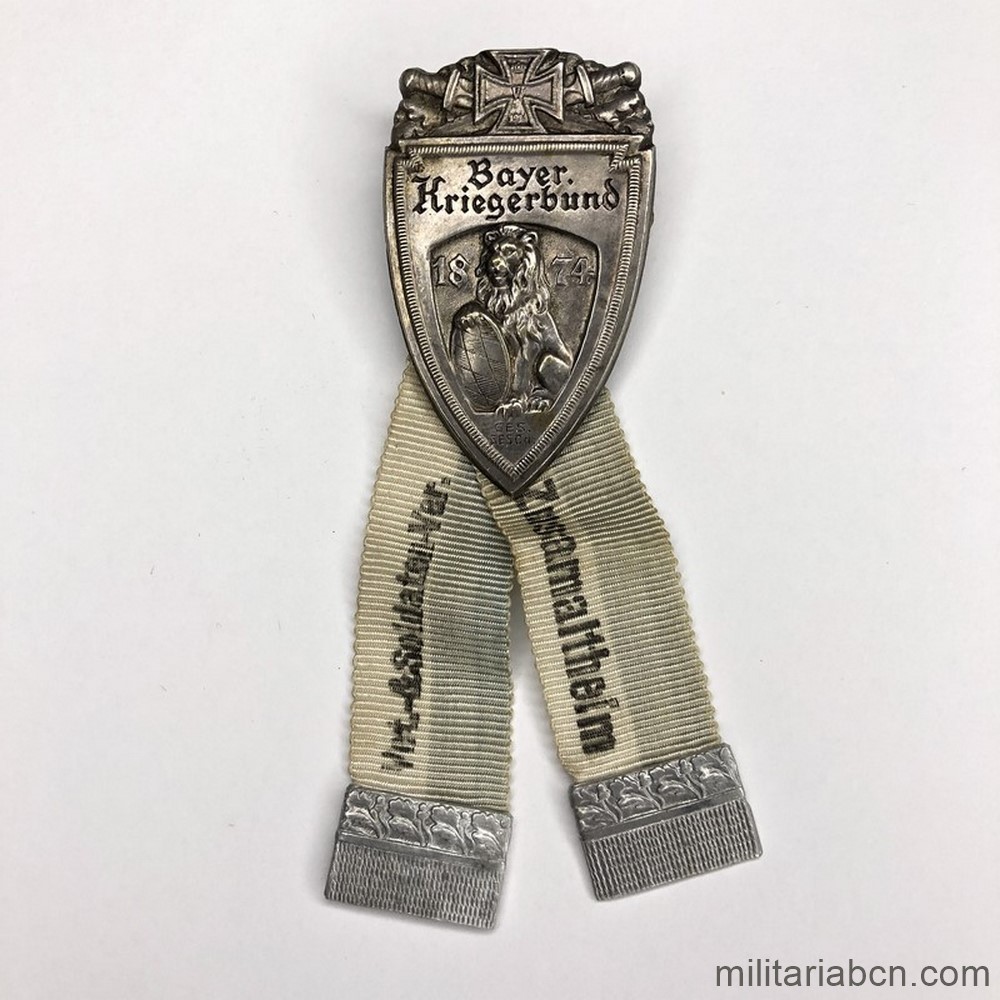
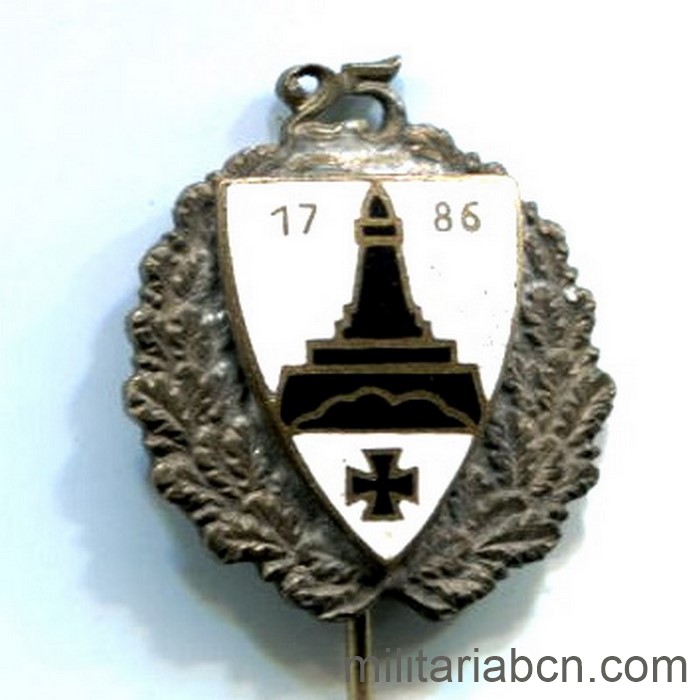
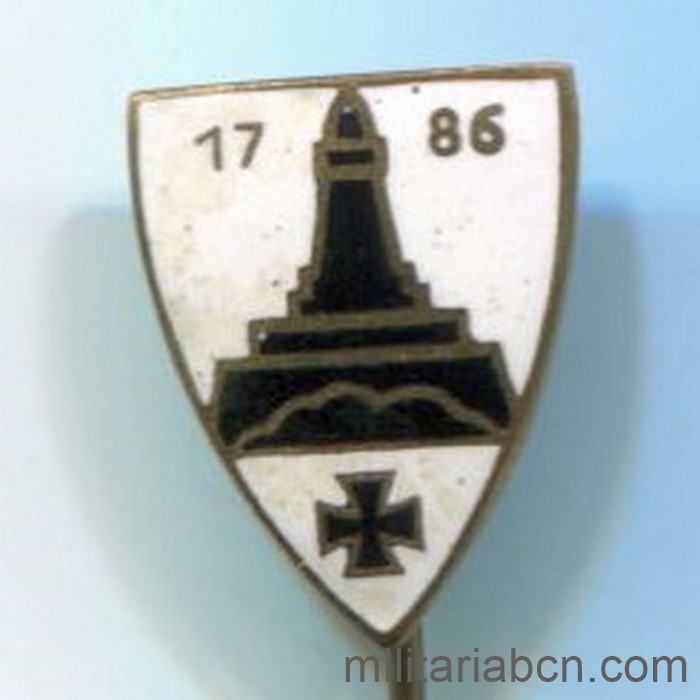
Germany. Weimar Republic. 5th Anniversary Badge of Rote Hilfe Deutschland. 1929.
The Red Aid of Germany (RHD) was a German political aid organization close to the KPD (Communist Party of Germany), which existed from 1924 to 1936.
In April 1921, as a result of the political repression following the March uprisings, the Red Aid Committees were established through a resolution at a KPD conference. In November 1921, a «Berlin Committee» was established as the «Central Committee.»
At the Fourth World Congress of the Comintern in Moscow (October 5 – November 12, 1922), the formation of a «Proletarian Red Cross» was decided, which later became the International Red Aid (IRH, Russian: МОПР/MOPR). On October 1, 1924, the «Red Aid of Germany» (RHD) was founded as an organization close to the KPD. One of the founding members was artist Heinrich Vogeler, who was also elected to the central executive committee. Its first president was Wilhelm Pieck, who later became the first and only president of the GDR and who had previously been the head of the «Central Legal Office of the State Parliament and the Reichstag Factions of the KPD.» In 1925, Clara Zetkin took over as head of the RHD. After the death of Julian Marchlewski that same year, she also led the International Red Aid.
Initially, the organization was actively involved in the «Red Aid for the Victims of War and Labor» campaign for the International Association of Victims of War and Labor. However, its work focused on supporting imprisoned members of the Red Front Fighters League, the SAP, the KAP, trade unionists, as well as non-party members and their families. To this end, legal advice centers were created, and publications critical of the judicial system were published.
In 1923, the Red Aid declared March 18th (Paris Commune) as «International Day of Aid for Political Prisoners,» and this day was maintained until it was banned by the National Socialists in 1933.
In March 1930, the RHD took part in founding a German section of the «International Legal Association» (IJV), which dealt with criminal, international, constitutional, and labor law.
In 1933, the RHD was banned as part of the Reichstag Fire Decree. Lawyers and jurists such as Hans Litten, Felix Halle, and Alfred Apfel were arrested that same night. The Gestapo infiltrated KPD official Max Troll into Munich as an informant and provocateur, arresting hundreds of communists. Between 1935 and 1936, the Red Aid was dissolved by the Secret State Police. Some members continued to work underground for a time, such as Lore Wolf, who, along with Johanna Kirchner, a member of the SPD-affiliated Workers’ Welfare Association, helped to exile threatened individuals through the Saar region. From 1933/34, Wilhelm Beuttel took over the leadership of the RHD’s external organization from Paris.